

Back

Adventure & Mobility Platform

Landmarks of Pirot

From the medieval Kale fortress to the stone village of Gostuša — the cultural and natural heritage of the Nišava valley.

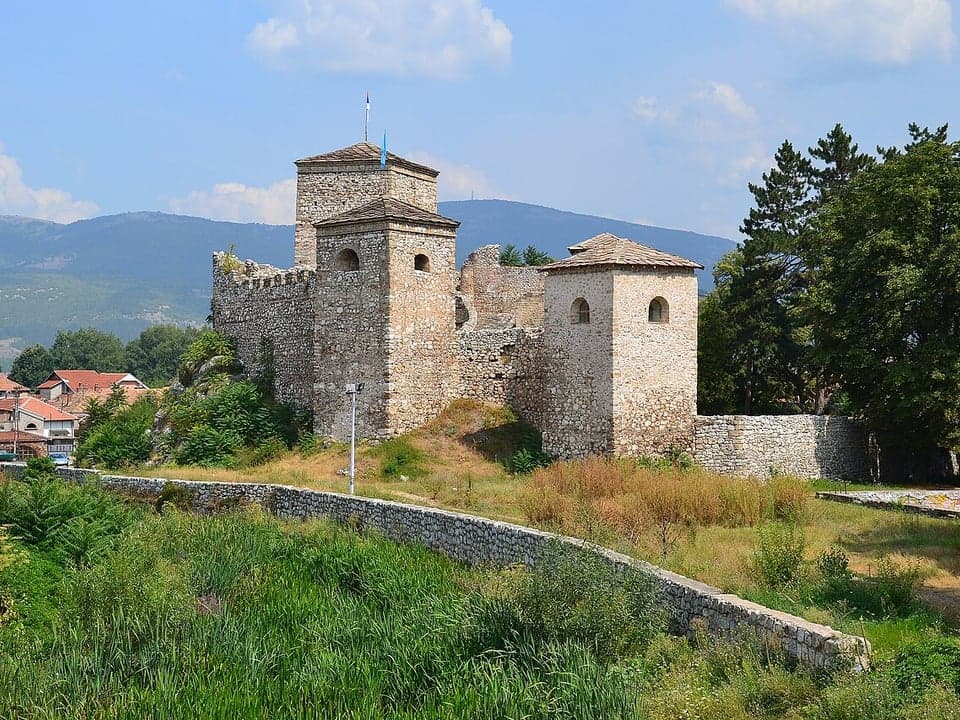
Pirot Fortress Kale (Momčilov grad)

The symbol of Pirot and one of Serbia's ten finest fortresses. This medieval citadel in the city centre — also called Kale, Pirot Fortress, or Momčilov grad — comprises Upper, Middle, and Lower towns with a donjon tower, ramparts, and gates. Built under Prince Lazar (1371–1389) on a site inhabited for millennia. Despot Stefan Lazarević extended the Middle town; the Lower town was added in Ottoman times (18th–19th c.). Restored and open to visitors; admission is free, with the Museum of Ponisavlje archaeological display nearby.

Source: Wikimedia Commons

Ramparts of Pirot Fortress

Walls, towers, and gates that for centuries guarded the Constantinople Road — the main trade and military route toward Istanbul. The Upper town has five towers linked by ramparts, including the tallest donjon. A marble plaque on the Lower town ramparts records Rahim Pasha's restoration in 1804. Scenes from the film Battle of Kosovo were shot on these walls.

Source: Marcin Szala (Pudelek), CC BY-SA 3.0

Museum of Ponisavlje — Old House (Hristić konak)

A Monument of Culture of Exceptional Importance (1848) in Tijabara — Pirot's best-preserved mid-19th-century house. Built for merchant Hrista Jovanović Mali Rista. The courtyard house with divanhana, icon room, woodcarving, and Pirot kilims illustrates the town's shift from Ottoman mahala to patriarchal urban life. The museum was founded in 1947; the permanent exhibition Town House of 19th-century Pirot opened in 1956.

Source: Wikimedia Commons

Archaeological display at the fortress

Permanent archaeological exhibition beside the fortress presents finds from prehistory to the 19th century — the same layers uncovered in fortress digs: Neolithic, Iron Age, Antiquity, Byzantium, and Middle Ages. An ideal complement after walking the ramparts.

Source: Wikimedia Commons

Stone village of Gostuša

An authentic stone village at the foot of Stara Planina, ~25 km from Pirot, on the Gostuša river. Houses built of stone without formal street grids — protected as cultural heritage. Won the Europa Nostra Award in 2016. Roman fortification remains lie nearby; the Church of Saint John the Baptist (restored 1835) stands in the village.

Source: Wikimedia Commons

Jerma River Canyon (Nature Reserve)

One of eastern Serbia's most dramatic gorges — the Jerma River canyon between Pirot and Dimitrovgrad, protected as a Special Nature Reserve. Cliffs, waterfalls, rare flora, and hiking trails attract nature lovers and photographers. Part of Pirot's adventure tourism alongside Stara Planina routes.

Source: DjordjeMarkovic, Wikimedia Commons

Sarlah mountain & viewpoint

Sarlah rises above Pirot with viewpoints and hiking paths — a favourite outing for locals and visitors. Summits offer views over Pirot, the Nišava, and surrounding hills. Caves and picnic spots lie on its slopes; a natural complement to fortress and riverside walks.

Source: Wikimedia Commons

Zavoj Lake

Reservoir on the Visočica river, ~15 km from Pirot, created by a dam in 1963 — popular for recreation, fishing, and the road onward to Gostuša. Surrounded by Stara Planina forests; the Belan plateau is nearby.

Source: Ivan Medenica, Wikimedia Commons

Cave Church of Saints Peter and Paul (Rsovci)

Unique 12th-century church inside a cave at Rsovci — home to the Jesus the Bridegroom fresco, rare in Serbian art. Partially built into rock; a Monument of Culture of Exceptional Importance. Part of the wider Pirot–Ponisavlje heritage circuit near the Jerma canyon.

Source: Wikimedia Commons

Pirot kilim & crafts of Ponisavlje

The Pirot kilim — geometric patterns and vivid colours — is UNESCO-listed intangible heritage and a city symbol. The Museum of Ponisavlje and local artisans showcase kilims, pottery, wood, and metal crafts. Festivals such as the Cheese & Kačkavalj Festival and Kale Fest celebrate this living tradition by the fortress.

Source: Marcin Szala (Pudelek), CC BY-SA 3.0

Summaries based on public tourism sources (Pirot Tourist Organization, Serbia.travel, Wikimedia Commons). Check opening hours before visiting.

WhatsApp · Ask for itinerary